

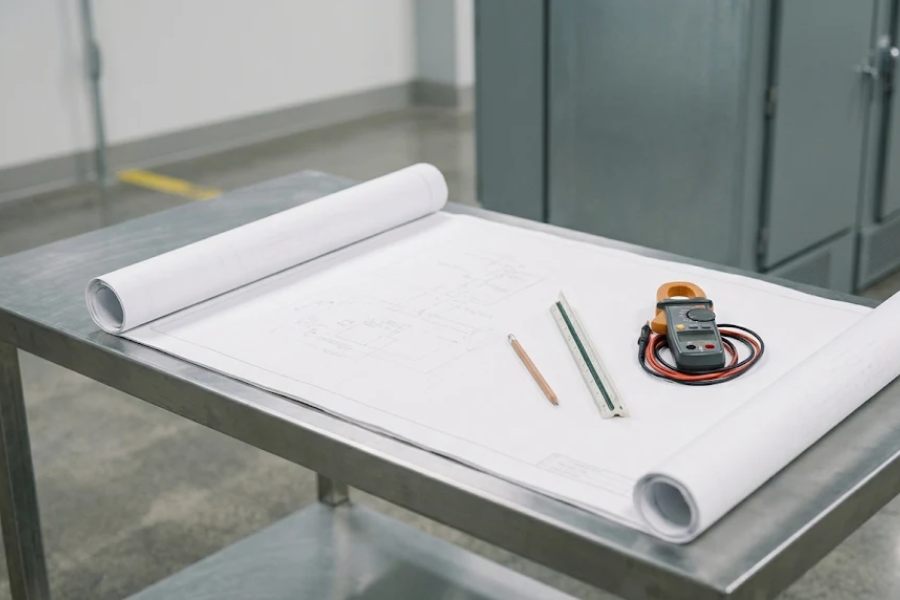
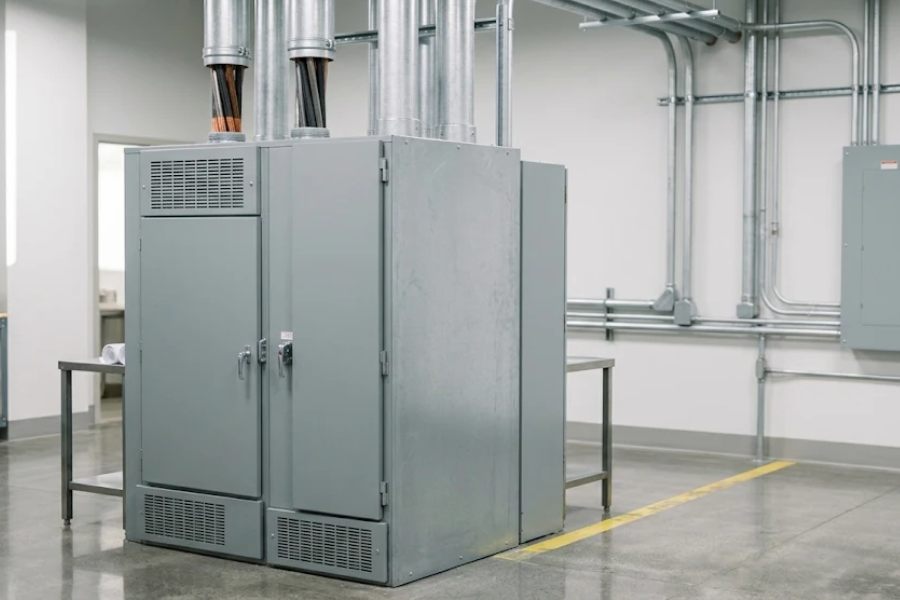
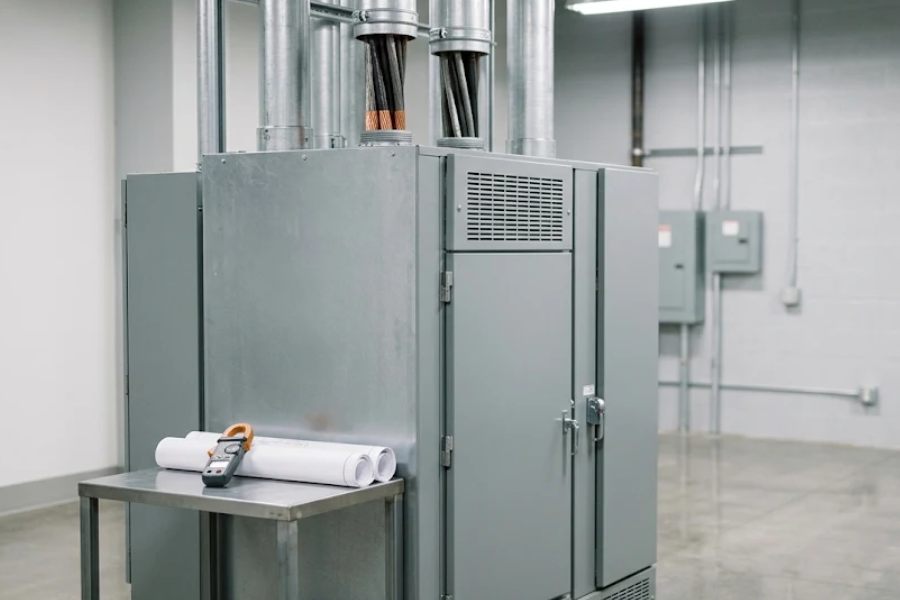
Electrical work is an in-demand profession that requires careful attention to detail and in-depth safety measures to avoid serious risks, such as arc flash injury. Electricians, maintenance technicians and the facility managers who supervise them should all understand this injury and how to respond to it. The best protection is prevention: an arc flash study, clear equipment labels and trained workers. Here, Leer Electric walks you through what an arc flash injury is, the steps to take in the event of an arc flash injury, and how to prevent one at your facility.
In an emergency, call 911 first. The first-aid steps below are general information from published medical guidance, not a substitute for emergency care or first-aid training.
What Is an Arc Flash Injury?
An arc flash injury can happen in an instant when an electrical discharge travels through the air. When this occurs, an intense amount of energy is released as light, heat and pressure. This burst of energy is very dangerous and often results from accidental contact between an energized conductor and another conductor or a grounded surface, from a dropped tool, or from failing equipment. Arc flashes can cause immediate burns and severe injuries. Depending on the amount of energy released, the blast can be powerful enough to knock a worker off their feet. Potential arc flash injuries include:
- Heat burns
- Burning clothing or skin
- Burns from hot gases
- Injury from flying debris and molten metal
- Concussion from the blast
- Broken bones from the blast or a fall
- Hearing loss
- Flash burns and vision damage
With the risk of arc flash injury present in electrical work, electricians and the people who work around electrical equipment must know how to respond and how to reduce these incidents.
What to Do When an Arc Flash Injury Occurs
Even when every possible step is taken to prevent an arc flash, the risk cannot be removed completely. Many electrical tasks expose workers to energized equipment. For this reason, everyone on site should know what to do, and what to avoid, if an arc flash occurs. The steps below follow first-aid guidance published by MedlinePlus, the U.S. National Library of Medicine, for electrical injury and burns.
What to Do
- Shut off the power if it is safe to do so. Open the disconnect or switch off the circuit breaker. If the power cannot be turned off and the person is still in contact with the source, use a dry, non-conductive object, such as a broom handle or a dry board, to move them away from it, while standing on something dry and insulating.
- Call 911 right away. Anyone injured by electricity or an arc flash needs emergency medical care, even if they seem fine.
- Check breathing and pulse. If the person is unconscious and not breathing normally, or has no pulse, begin CPR if you are trained, and continue until help arrives.
- If clothing is on fire, have the person get down and roll, and smother the flames with a heavy coat, rug or blanket.
- Care for burns. For a small burn, rinse the area with cool (not cold) running water. Cover burns loosely with a dry, sterile bandage or clean cloth; a clean sheet works for large burns.
- Watch for shock. If the person is faint, pale or showing other signs of shock, and there is no head, neck, back or leg injury, lay them flat, raise their feet about 12 inches and cover them with a coat or blanket.
- Stay with the person until emergency responders arrive.
Some effects of an arc flash and electric current are not immediately visible, including internal injuries. Anyone who has been involved in an arc flash should be evaluated by a medical professional as soon as possible.
What Not to Do
- Do not touch the person with bare hands while they are still in contact with the electrical source. Making contact could injure you as well.
- Do not approach a person in contact with high-voltage equipment until the power is confirmed off.
- Do not remove clothing that is stuck to the skin. Remove only loose clothing and items that are not stuck.
- Do not move the person unless there is an ongoing danger, such as fire. A blast or fall can cause head, neck or spine injuries; keep the head and neck still if a spine injury is possible.
- Do not put ice, butter, ointments or creams on burns, and do not break blisters or peel away skin.
- Do not put a large, severe burn in cold water, which can bring on shock.
- Do not give the person anything by mouth if the burn is severe.
How an Arc Flash Study Prevents Arc Flash Injuries
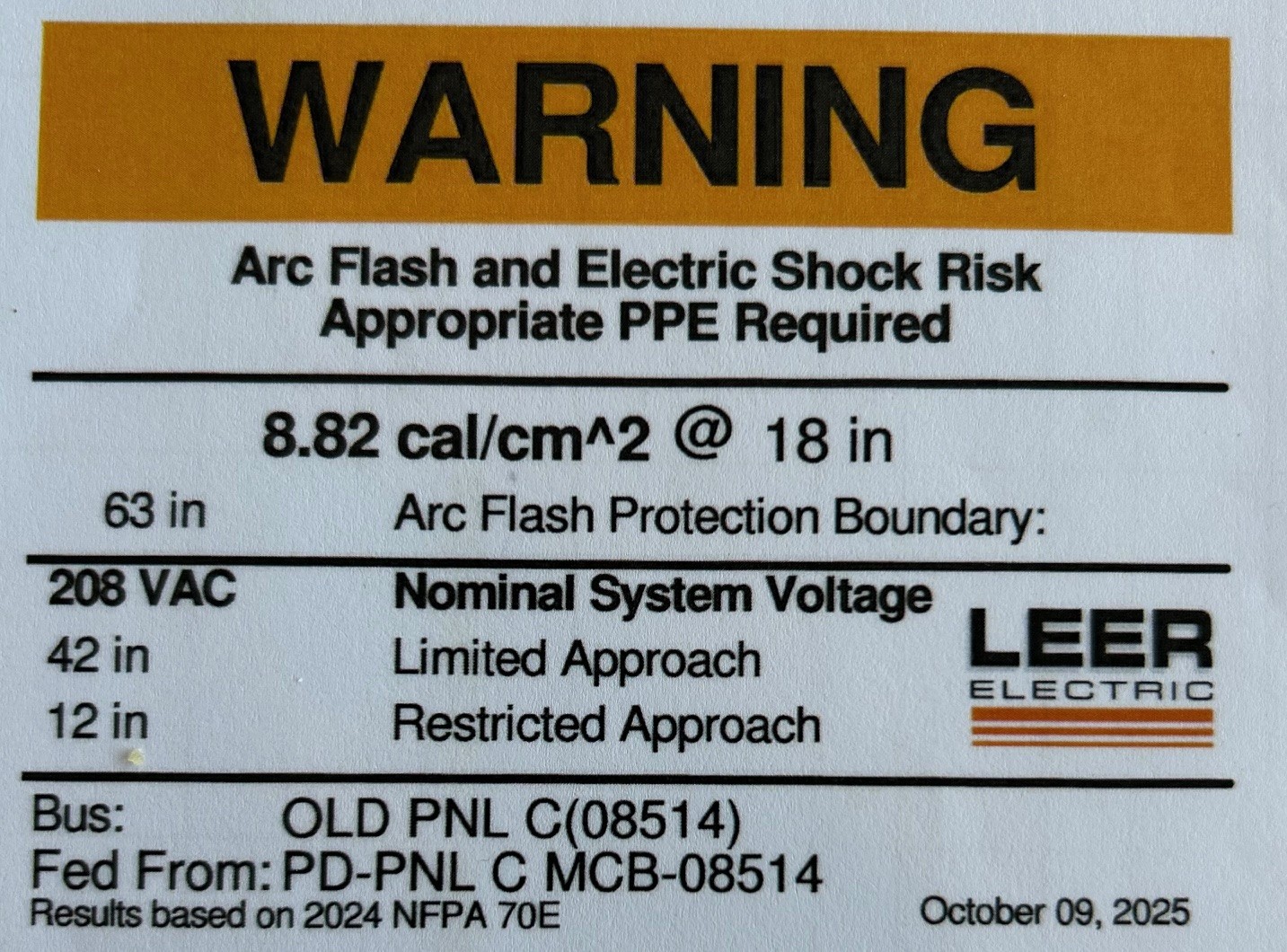
Knowing first aid is important, but the goal is to never need it. An arc flash study (also called an arc flash hazard analysis) is the foundation of arc flash prevention. It calculates how much energy could be released at each piece of electrical equipment in your facility and how far that energy could reach. The results are used to:
- Label equipment with the arc flash boundary and the incident energy or PPE category, so workers know the hazard before they open a cover.
- Select the right PPE, so arc-rated clothing and face protection match the actual hazard.
- Find high-energy locations where protective device settings, equipment changes or remote operation can reduce the hazard.
- Plan safer work, including when equipment must be de-energized and locked out before work begins.
NFPA 70E requires the arc flash risk assessment to be reviewed at least every five years and updated when the electrical system changes. Because the study assumes breakers and fuses will clear a fault as designed, it works best alongside an electrical preventive maintenance (EPM) program that keeps that equipment in good condition.
NFPA 70E Training for Your Team
Labels and PPE only protect people who understand them. NFPA 70E electrical safety training teaches workers to recognize shock and arc flash hazards, read arc flash labels, establish an electrically safe work condition with lockout/tagout, respect approach boundaries, and select and wear the right PPE. It also covers emergency response, including how to safely release a person from contact with an energized circuit.
NFPA 70E calls for retraining at intervals not to exceed three years, and sooner when work practices, equipment or procedures change. For facility, plant and maintenance managers, training, a current arc flash study and maintained equipment work together to keep people safe.
Learn Additional Electrical Safety Measures at Leer Electric
Whether you are a facility manager responsible for a team, or a current, new or future electrician, more knowledge about arc flash injury and how to respond to it makes every workplace safer. Leer Electric has served businesses across Central Pennsylvania since 1973, and we provide arc flash studies, NFPA 70E electrical safety training and electrical preventive maintenance for commercial and industrial facilities. Contact us or call (717) 432-9756 to learn more about electrical workplace safety and the services we provide.