


Single-phase and three-phase describe how electrical power reaches your building. Single-phase power uses one alternating current. It suits homes and light loads. Three-phase power uses three alternating currents, timed apart from each other, so power flows in a steady, overlapping stream. That makes three-phase far better for heavy equipment and large motors. Most Central Pennsylvania homes run on single-phase. Most factories, warehouses, and larger facilities run on three-phase, because it powers machines efficiently and reliably. This guide explains the real difference between the two and why it matters for your facility. It also covers the common voltages you will see and the clear signs a building needs three-phase power.
What Is Single-Phase Power?
Single-phase power delivers electricity through one alternating current. The power rises and falls in a wave, so it comes in pulses rather than a steady flow. For light loads, that is perfectly fine.
Single-phase works well for lighting, outlets, computers, and small motors. It is the standard supply for homes and small shops. In the United States, single-phase service is usually 120 volts and 240 volts. It handles everyday needs without trouble.
What Is Three-Phase Power?
Three-phase power delivers electricity through three alternating currents at once. Each one is timed a third of a cycle apart. As one current dips, another rises, so the combined power stays close to constant.
That steady flow is the key. It runs large motors smoothly, with less vibration and less heat. Three-phase is the standard for industrial and large commercial sites. Common voltages are 208 volts, 240 volts, and 480 volts, depending on the equipment and the building.
Single-Phase Versus Three-Phase at a Glance
Here is how the two compare on what matters for a facility.
|
Factor |
Single-Phase | Three-Phase |
| Power flow | Pulses up and down |
Steady and overlapping |
|
Best for |
Homes, offices, light loads | Factories, large motors, heavy loads |
| Typical voltage | 120V and 240V |
208V, 240V, and 480V |
|
Large motor support |
Weak | Strong |
| Efficiency for heavy loads | Lower |
Higher |
Why Three-Phase Power Matters for Facilities
The main reason is motors. A facility lives and dies by its motors, and motors love three-phase power.
Electric motors are the single biggest electrical load in most plants. The U.S. Department of Energy reports that motors account for about 70 percent of the electricity used by U.S. manufacturers. Three-phase power runs those motors with steady torque, which means less wear and longer equipment life.
Three-phase also moves more power through less wire. For the same load, three-phase needs smaller conductors than single-phase. That lowers material cost and heat. It also spreads the load evenly, which keeps the system stable. For a busy facility, that efficiency adds up fast. This is why nearly all heavy commercial and industrial electrical services are built around three-phase power.
Reliability is the other payoff. Steady power means motors run cooler and last longer. That lowers the risk of a sudden failure that stops production. For a plant, less downtime is money saved.
Common Three-Phase Voltages in Central Pennsylvania Facilities
Not all three-phase power is the same. The voltage depends on the building and the equipment it runs.
|
Voltage |
Typical Use |
| 208V three-phase |
Small commercial sites, light machinery, mixed loads |
|
240V three-phase |
Older systems and certain motor loads |
| 480V three-phase |
Factories, large motors, and heavy production equipment |
Higher voltage carries more power with less current. That is why large plants favor 480 volts for big motors and machines. The right voltage for your site depends on your load, which is why proper electrical design matters before any upgrade.
How to Tell Which Power Your Building Has
You do not have to guess. A few simple checks point to the answer.
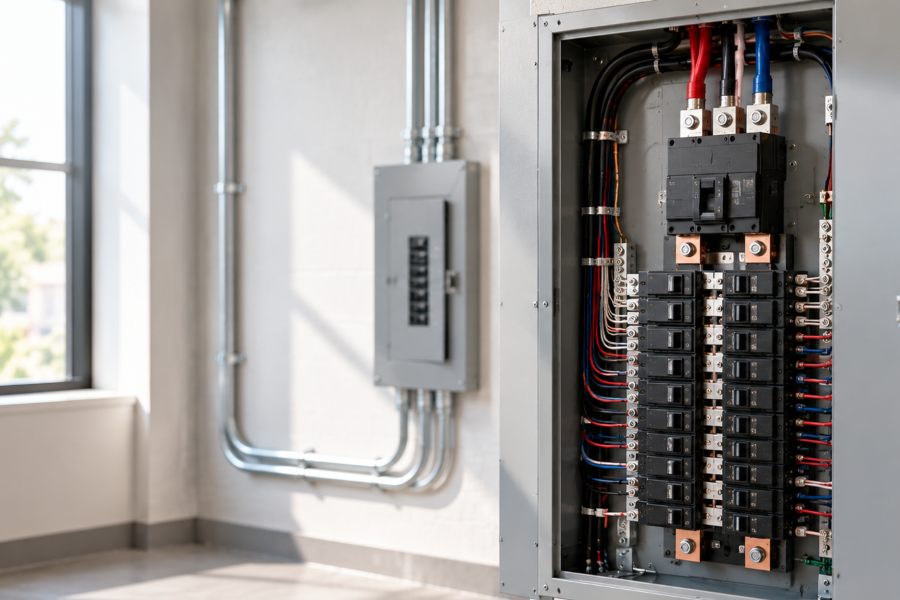
- Look at the service panel. Single-phase service brings in fewer hot legs than three-phase.
- Check equipment nameplates. Motors and machines list the phase and voltage they need.
- Watch how heavy equipment runs. Large motors that stall or struggle may be starved of power.
- Ask a licensed electrician. A quick professional check is the fastest, safest way to confirm.
Knowing what you have is the first step before adding equipment or planning an upgrade.
Signs Your Facility Needs Three-Phase Power
Some operations simply cannot run well on single-phase. Watch for these signs.
- You run large motors. Big compressors, pumps, fans, and HVAC units need three-phase.
- Breakers trip often. Heavy loads on single-phase can overload the system.
- You are adding production equipment. New machines usually call for three-phase.
- Lights dim when machines start. This points to a load the system cannot handle.
- You are planning to expand. Growth almost always needs more power.
If any of these sound familiar, it is time to talk to an electrician. These issues are common in manufacturing plants and growing warehouses across the region.
Upgrading to Three-Phase Power
Most facilities get three-phase power straight from the utility. Where the utility does not supply it, a phase converter or transformer can create three-phase from a single-phase source. Each option has trade-offs in cost and capacity.
This is skilled work. An upgrade needs a load calculation, the right voltage, and a safe, code-compliant install. It also needs testing to confirm the system is balanced and sound. Regular preventative maintenance and testing keeps that three-phase system healthy for years. A trained industrial electrician handles the whole job, from design to final check.
Final Thoughts
Single-phase and three-phase power serve different needs. Single-phase fits homes and light loads, with power that pulses up and down. Three-phase fits facilities, with steady power that runs large motors cleanly and efficiently. Because motors drive most of a plant’s electricity use, three-phase is the backbone of industrial and commercial sites. If your building runs heavy equipment or is set to grow, three-phase is likely the right call.
For expert industrial electrical work across Central Pennsylvania, Leer Electric designs, installs, and maintains three-phase systems that keep your operation running. Request a quote today.