

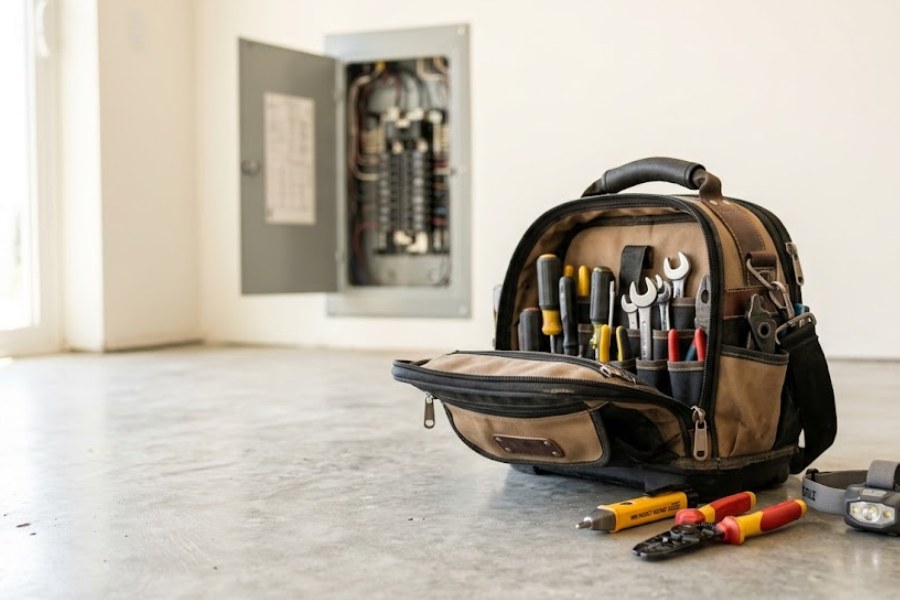



Some electrical jobs need a journeyman electrician, not a handyman, because they carry real risk and require training a handyman does not have. A journeyman has spent years learning the trade under supervision and has passed testing to prove it. A handyman is a generalist who is great for small fixes but not trained for licensed electrical work. Panel work, new circuits, rewiring, and anything behind your walls should go to a qualified electrician. In Central Pennsylvania, where electrical licensing is set locally, choosing the right person protects your safety, your insurance, and your home’s value. This guide explains the difference between the two, which jobs need which, the risks of getting it wrong, and how to tell who your project really needs.
What Is a Journeyman Electrician?
A journeyman electrician is a trained professional who can work independently. Getting there takes years. Most journeymen complete a registered apprenticeship of about 8,000 hours of supervised, on-the-job training. That is roughly four to five years of real work. They also finish hundreds of hours of classroom instruction and pass an exam.
That training covers the National Electrical Code, wiring, safe work practices, and how systems fail. A journeyman learns to plan a job, spot a hazard, and do the work to code. This is why a company built on skilled journeymen and apprentices can handle work a handyman should never touch.
What Is a Handyman?
A handyman is a general repair person who handles many small tasks around a home. Think mounting a shelf, patching drywall, or fixing a door. It is useful, honest work. But a handyman is not a trained or licensed electrician.
There is no electrical apprenticeship behind a handyman’s skills. In Pennsylvania, a handyman who does $5,000 or more of home improvement work a year must register with the Attorney General under the Home Improvement Consumer Protection Act. That registration is a consumer protection step. It is not proof of electrical training, and it does not make someone an electrician.
Journeyman Versus Handyman at a Glance
Here is how the two compare on the things that matter for electrical work.
|
Factor |
Journeyman Electrician | Handyman |
| Training | Years of apprenticeship, plus code classes and an exam |
General repair skills, no electrical apprenticeship |
|
Code knowledge |
Trained in the National Electrical Code | Limited or none |
| Permits | Can perform permitted electrical work |
Not qualified for permitted electrical work |
|
Best for |
Wiring, panels, circuits, and safety-critical jobs |
Small, non-electrical fixes |
Which Electrical Jobs Need a Journeyman?
Any job that touches your home’s wiring system deserves a trained electrician. These jobs carry fire and shock risk, and most need a permit and an inspection. Call a journeyman for work like this.
- Panel upgrades and replacements. Your service panel is the heart of the system. Getting it wrong is dangerous. This is core residential electrical work for a licensed pro.
- New circuits and wiring. Adding a circuit or running new wire changes the load on your system. It must be sized and installed to code.
- Service upgrades. Moving from lower to higher amperage is a job for an electrician. Leer handles service upgrades as standard work.
- Rewiring older homes. Old or damaged wiring is a leading fire risk. Replacing it is skilled work.
- Hardwired appliances and EV chargers. These draw heavy power and need a proper, dedicated circuit.
- Generator hookups. A wrong connection can backfeed power and injure a lineworker. This is never a DIY or handyman task.
- Troubleshooting faults. Finding why a breaker trips or an outlet is dead takes trained diagnosis.
Commercial and industrial jobs raise the stakes even more. Larger systems, higher voltage, and code demands make commercial and industrial electrical services a job for experienced electricians only.
Which Jobs Can a Handyman Usually Handle?
A handyman can take on small, low-risk tasks that do not change your wiring. Even here, local rules can require an electrician, so check first. Common handyman-friendly tasks include:
- Replacing a light fixture where wiring already exists
- Swapping a cover plate on a switch or outlet
- Installing a plug-in device, like a smart plug or lamp
- Resetting a tripped breaker or a GFCI outlet
The line is simple. If the job only connects to existing, safe wiring, a handyman may be fine. If it changes, adds, or repairs the wiring itself, you need an electrician.
Who to Call for Common Electrical Jobs
Use this quick guide to match the job to the right person.
|
Common Job |
Who You Need |
| Panel upgrade or replacement |
Journeyman electrician |
|
New circuit or new wiring |
Journeyman electrician |
| Service upgrade to higher amperage |
Journeyman electrician |
|
Rewiring an older home |
Journeyman electrician |
| EV charger or generator hookup |
Journeyman electrician |
|
Like-for-like light fixture swap |
Handyman may be fine |
| Switch or outlet cover plate |
Handyman may be fine |
|
Plug-in smart device or lamp |
Handyman may be fine |
The Risks of Hiring the Wrong Person
Cutting corners on electrical work can cost far more than it saves. The dangers are real and well documented.
The Electrical Safety Foundation International reports that more than 300 people are electrocuted each year in the United States. Thousands more suffer shock and burn injuries. The group’s advice is direct. For electrical work in your home, hire a qualified, licensed electrician.
Beyond safety, poor work creates other problems:
- Failed inspections. Unpermitted or bad work often fails inspection and must be redone.
- Voided insurance. A claim can be denied if a fire traces back to unlicensed electrical work.
- Resale trouble. Unpermitted work can stall a home sale or lower the price.
- Double cost. Paying twice, once to fix the mistake, wipes out any early savings.
How Central Pennsylvania Licensing Shapes Who You Need
Pennsylvania has no statewide electrical license. Each city and township sets its own rules. Some places, like Harrisburg, require a local electrical license. Many require permits and inspections for electrical work.
All electrical work must still meet the Pennsylvania Uniform Construction Code, which adopts the National Electrical Code. A trained electrician knows this code and works to it. A handyman usually does not. Because the state leaves licensing to local governments, the job of picking a qualified electrical contractor in Central Pennsylvania falls to you.
How to Tell Who Your Job Needs
You do not need to be an expert to make the right call. Ask three simple questions before you hire.
- Does the job need a permit? If yes, you need a licensed electrician.
- Does it add, change, or repair wiring? If yes, call a journeyman.
- Does it touch the panel or a dedicated circuit? If yes, this is electrician work.
If you answer no to all three, and the task is simple and cosmetic, a handyman may be fine. When you are unsure, treat it as electrician work. That choice is always the safer one.
Final Thoughts
A handyman has a real place in home care, but electrical work is a different matter. Jobs that touch your wiring, your panel, or your circuits need the training and code knowledge of a journeyman. The right choice protects your family from fire and shock, keeps your insurance valid, and holds up at resale. When a job is more than cosmetic, choose a trained electrician.
For work that needs a licensed pro, Leer Electric brings a skilled team to homes and businesses across Central Pennsylvania. From panel upgrades to full rewiring, the job gets done safely and to code. Request a free estimate today.