
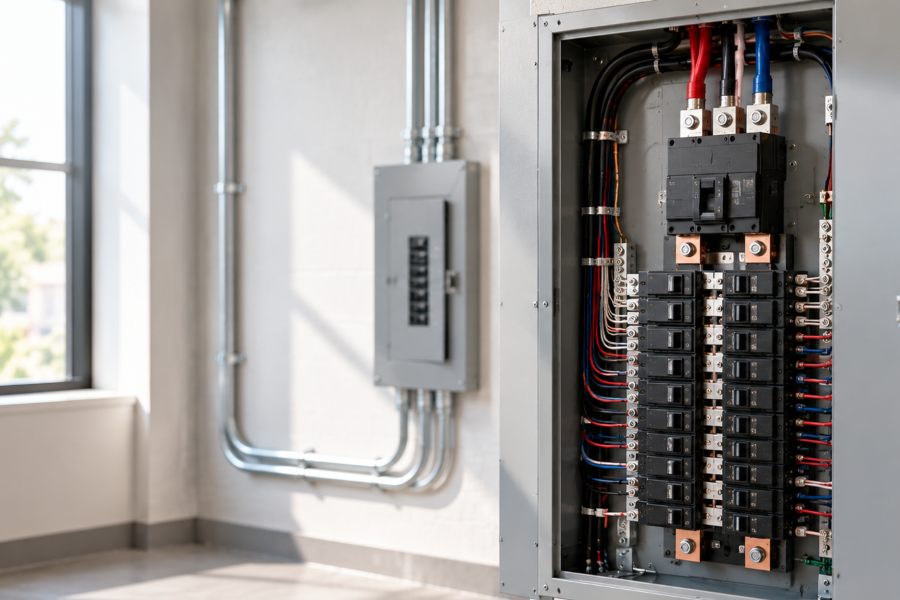
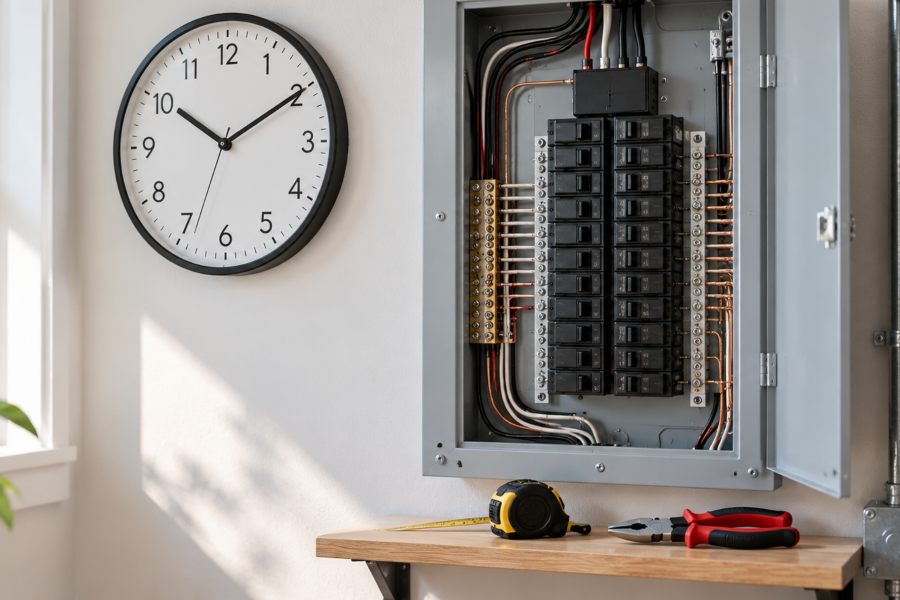
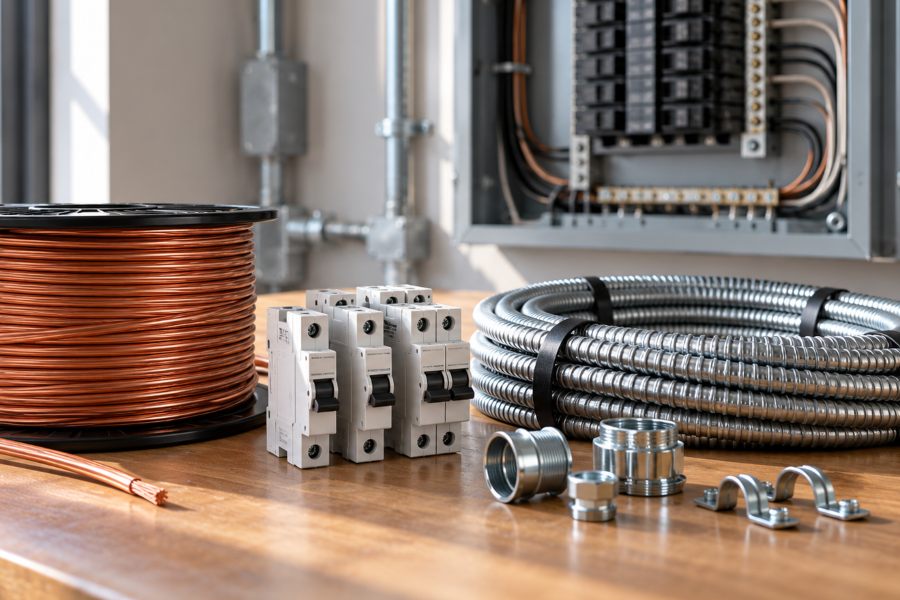


A motor control center, or MCC, is a single assembly that houses the controls and protection for many electric motors in one place. It lets a plant start, stop, control, and protect its motors from one central hub. Inside an MCC are motor starters, contactors, overload relays, circuit breakers, and often variable frequency drives, grouped into modular sections. Plants rely on motor control centers because motors are the biggest electrical load in a facility. Running them from one safe, organized location saves space, improves safety, and makes maintenance far easier. This guide explains what a motor control center does, what sits inside it, why plants depend on it, and how to keep one running safely and reliably.
What Is a Motor Control Center?
A motor control center is a lineup of enclosed sections that stand together as one unit. Each section holds the gear that runs one motor or load. The sections share a common power supply through copper bus bars that run across the lineup.
Think of it as the command post for a plant’s motors. Instead of scattered controls across the building, the MCC puts them side by side in one steel structure. Each removable section is often called a bucket or a unit. A single MCC can control dozens of motors at once.
What Does a Motor Control Center Do?
A motor control center handles four main jobs. Together they keep a plant’s motors running and safe.
- It starts and stops motors. Each unit can turn its motor on and off, by hand or by an automatic signal.
- It controls motor speed. With variable frequency drives, an MCC can run a motor faster or slower to match the work.
- It protects motors. Overload relays and breakers cut power fast when a motor draws too much current or a fault hits.
- It centralizes control. One location ties into the plant’s automation system, so operators manage many motors from a single point.
This is why a motor control center sits at the heart of most commercial and industrial electrical services in a production facility.
What Is Inside a Motor Control Center?
An MCC is built from a set of standard parts. Each one has a clear job. Here is what you will find inside.
|
Component |
What It Does |
| Incoming power and bus bars |
Bring in power and share it across all sections |
|
Motor starters |
Start and stop each motor safely |
| Contactors |
Switch the motor’s power on and off |
|
Overload relays |
Trip the circuit when a motor draws too much current |
| Circuit breakers or fuses |
Protect against short circuits and faults |
|
Variable frequency drives |
Control motor speed to match the load |
| Control wiring and terminals |
Link the MCC to switches, sensors, and automation |
Each unit, or bucket, usually combines several of these parts. The modular design means a unit can be pulled out and serviced without shutting down the whole lineup.
Why Plants Rely on Motor Control Centers
Motors drive nearly everything in a plant, from pumps and fans to conveyors and compressors. Electric motor-driven systems use nearly a quarter of all the electricity consumed in the United States, according to the U.S. Department of Energy. In a factory, they are the single largest electrical load.
With so much riding on motors, plants need a smart way to run them. A motor control center delivers that in several ways.
- Centralized control. Operators manage every motor from one place.
- Strong protection. Built-in relays and breakers guard motors against damage.
- Space savings. One lineup replaces many scattered panels.
- Safety. Enclosed sections keep live parts contained and reduce risk to workers.
- Easier maintenance. A faulty unit can be found and serviced fast.
- Room to grow. Spare sections let a plant add motors as it expands.
Motor Control Center Versus Separate Controls
Some older sites run each motor from its own scattered controller. A motor control center pulls that work into one place. The difference shows up every day.
|
Factor |
Motor Control Center | Separate Controls |
| Layout | One organized lineup |
Scattered across the plant |
|
Space used |
Compact footprint | Takes up more room |
| Maintenance | Service one unit at a time |
Hunt down each controller |
|
Safety |
Live parts enclosed | Varies by install |
| Adding motors | Slot in a spare unit |
Wire in a new panel |
Motor Control Centers and Energy Savings
An MCC does more than run motors. It can cut the energy they use. That matters, since motor power is often the largest utility cost in a plant.
The key is the variable frequency drive. A VFD slows a motor to match the real demand of the moment, instead of running it flat out all the time. On pumps and fans with changing loads, that can lower energy use by a wide margin. Housing VFDs inside the motor control center puts this control, and these savings, in one managed place.
Keeping a Motor Control Center Safe and Reliable
A motor control center carries heavy power, so it needs regular care. Neglect invites downtime and real danger.
Loose connections and worn parts create heat. Over time, that heat can cause a fault or even an arc flash, which is a sudden, dangerous release of electrical energy. Routine preventative maintenance and testing catches these problems early. Infrared scans spot hot connections before they fail. Testing confirms the breakers and relays still trip when they should.
Safe service also follows set standards for working on live equipment. A trained industrial team knows how to test, clean, and repair an MCC without putting workers or production at risk.
When a Plant Needs Motor Control Center Work
A few situations call for a professional. Watch for these.
- A new line or facility that needs motors installed and controlled
- An aging MCC with worn parts or frequent nuisance trips
- An expansion that adds motors beyond the current capacity
- A plan to add variable frequency drives for speed control or energy savings
- Tie-ins to a new or upgraded automation system
Work like this fits hand in hand with control and automation upgrades that make a plant run smarter. These are common needs in manufacturing plants across Central Pennsylvania.
Final Thoughts
A motor control center is the hub that starts, controls, and protects the motors a plant depends on. It groups starters, contactors, overloads, breakers, and drives into one organized, modular lineup. That central design saves space, improves safety, and keeps maintenance simple. Because motors carry most of a plant’s electrical load, a well-run MCC is one of the most important systems in the building. Keep it tested and maintained, and it will protect your motors and your uptime for years.
For expert industrial electrical work on motor control centers across Central Pennsylvania, Leer Electric installs, services, and tests the systems your plant runs on. Request a quote today.